Discharge Lamps
Mercury, xenon, deuterium and hollow-cathode spectral sources
Introduction
This article presents several unusual discharge lamps used as optical and spectroscopic sources. The collection includes high-pressure mercury lamps, a xenon lamp, a deuterium ultraviolet lamp and a silver hollow-cathode lamp.
High-Pressure Mercury Lamps
The two high-pressure mercury lamps shown here were designed for spectrometers and spectral-analysis instruments. During operation, the mercury evaporates and the pressure inside the arc tube can become extremely high. The original lamp information quoted an operating pressure around 75 bar.
Such lamps are normally installed inside a protective housing and must be handled carefully, preferably with gloves and eye protection. Typical ignition voltage is much higher than the normal running voltage. The original notes listed approximately 2 kV for ignition and about 60 V at 3.3 A during operation, corresponding to roughly 200 W.
Xenon and Deuterium Sources
Xenon arc lamps provide a broad, intense spectrum and are widely used in optical instruments. Deuterium lamps are common ultraviolet sources for spectrophotometers and typically provide useful continuous emission through much of the UV range, approximately 180–400 nm depending on the lamp and optical system.
Hollow-Cathode Lamp
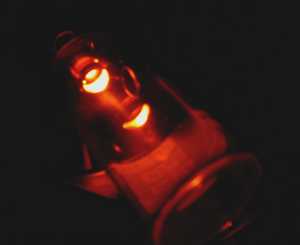
A hollow-cathode lamp is used in atomic-absorption and related spectroscopy. The cathode contains the element of interest—in this example, silver—while a low-pressure noble gas such as neon supports the discharge. The emitted spectrum contains characteristic lines of both the cathode material and the fill gas. One of the photographs shows a spectrum recorded with my homemade spectrometer.
Other Lamps
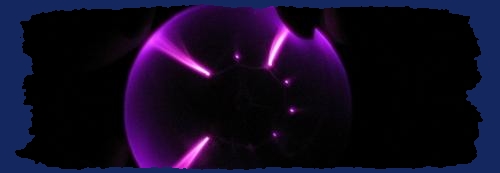
The gallery also includes a historical X-ray-tube experiment based on a rectifier tube and additional specialised lamps. These devices illustrate how gas pressure, electrode material and discharge conditions determine the resulting spectrum.
Project Gallery