
Vacuum Tubes
Interesting valves, display tubes, magnetrons and radiation detectors
Introduction
A vacuum tube is the historical predecessor of the transistor. Like a transistor, it can amplify a signal, and some tube types can also rectify alternating current. This article does not attempt to reproduce a complete textbook explanation; instead, it introduces several interesting and less common types of tubes.
Cathodes, Electrodes and Vacuum
Every vacuum tube contains a cathode. It may be directly heated, where the heated tungsten filament itself acts as the cathode, or indirectly heated, where the emissive cathode is electrically insulated from the heater. Because pure tungsten has relatively low thermionic emission, it is often coated with oxides of barium, calcium or other suitable materials, sometimes including thorium compounds.
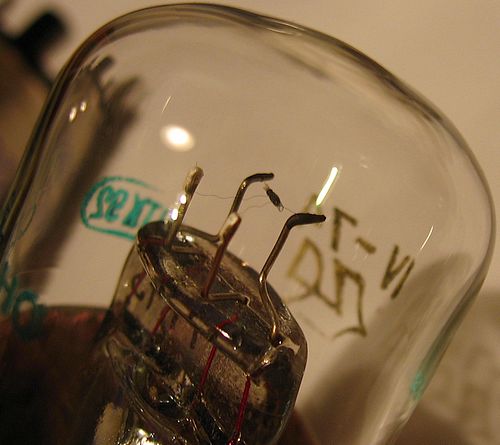
The grids, anode and cathode structures are commonly made from iron- or nickel-based alloys. A good vacuum is essential. After the air is pumped out, a getter material is activated inside the envelope. The getter absorbs residual gases and usually appears as the familiar silver or dark metallic mirror on the inner glass surface.
Magnetron
One particularly interesting high-frequency tube is the magnetron. It became important in radar systems, where short pulses of high-frequency electromagnetic energy are transmitted and reflected from distant objects. Magnetrons can achieve high efficiency and outputs ranging from hundreds of watts to extremely large pulsed powers.
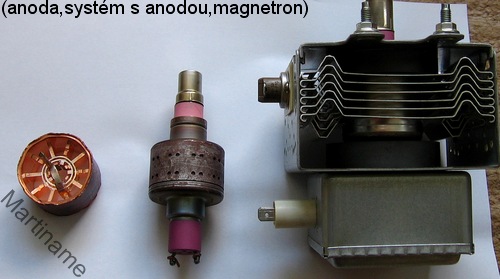
A common household microwave-oven magnetron operates near 2.45 GHz and typically produces around 700–1,000 W of microwave power. Microwave energy strongly interacts with polar molecules such as water, causing rapid heating. The photographs show the anode cavity structure and waveguide, the cathode assembly, cooling fins and the permanent magnets required for magnetron operation.
Examples of Unusual Tubes
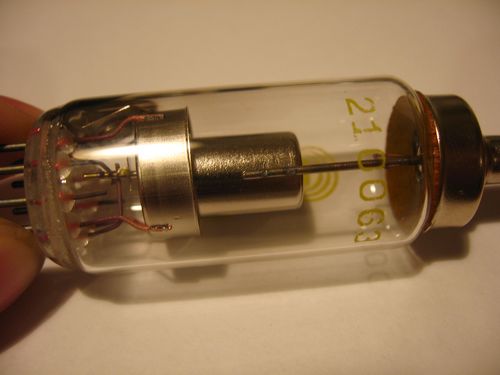
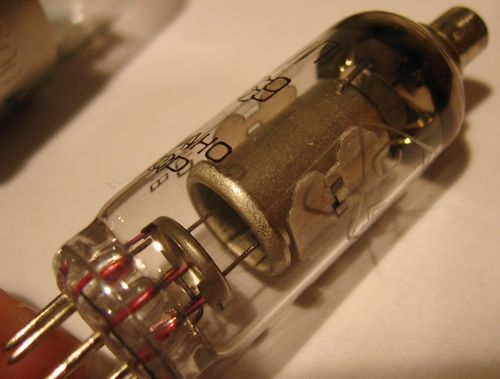
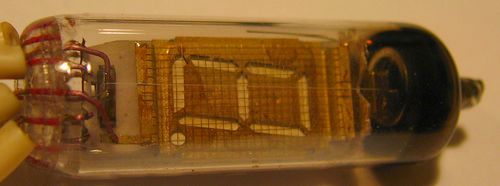
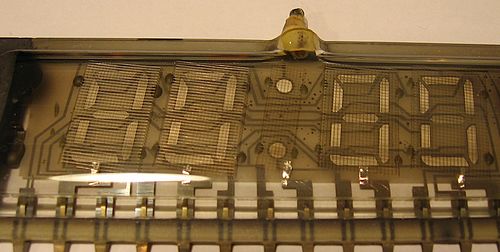
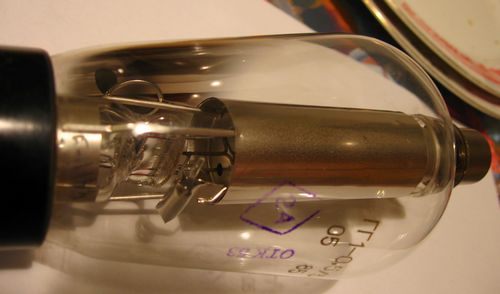
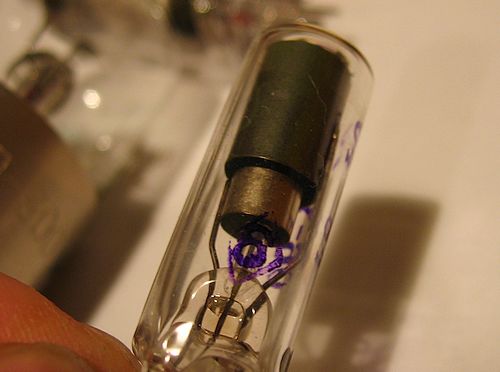
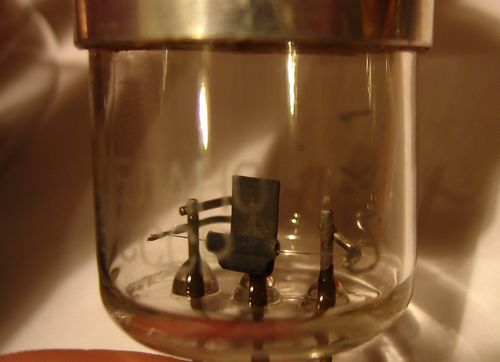
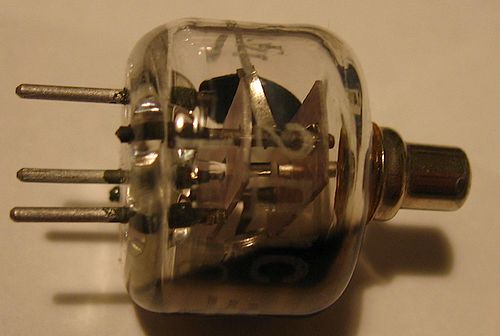
The gallery includes several unusual components: DY86 high-voltage rectifier tubes, other high-voltage diodes, fluorescent display tubes, a Geiger–Müller tube, a 5 kV xenon-filled rectifier, a platinum–silver thermistor, a neon-filled thyratron, a triode and a radio-frequency tube intended for oscillators up to approximately 3 MHz.
Project Gallery