Oxygen
O₂, oxygenium, ozone and historical preparation methods
Introduction
Oxygen is a biogenic element. Its chemical symbol is O, and molecular oxygen is O₂. Its relative atomic mass is approximately 15.9994 u, its melting point is −218.79 °C, its boiling point is −182.95 °C, its electronegativity is 3.44 and its density under standard conditions is approximately 1.429 kg/m³.
Oxygen represents roughly 21% of Earth's atmosphere. It also occurs chemically bound in many compounds, including water, minerals, rocks and living organisms.
Physical and Chemical Properties
Oxygen is a colourless, reactive and non-flammable gas that supports combustion. It is slightly soluble in water, has no taste or smell and is slightly denser than air. It is essential for respiration and enables the combustion of many materials.
Compressed oxygen is transported in pressure cylinders identified according to the applicable national gas-cylinder colour standard. Industrial oxygen is commonly produced by fractional distillation of liquefied air. It can also be produced by electrolysis of water when a suitable electrolyte is present.
Uses of Oxygen
Oxygen is used in breathing equipment, oxy-fuel torches, metallurgy, medicine and rocket technology. It also participates in the formation of oxides—compounds of elements with oxygen—and in oxidation reactions generally described as combustion.
Ozone
Oxygen also occurs as the triatomic molecule ozone, O₃. Ozone is a blue, extremely reactive gas with strong oxidising properties.
In Earth's atmosphere, the ozone layer is concentrated mainly in the stratosphere at altitudes of roughly 15–35 km. It absorbs a significant part of the Sun's harmful ultraviolet radiation. Chlorofluorocarbons and related compounds can catalytically deplete stratospheric ozone.
Ozone can form during thunderstorms and electrical discharges when O₂ molecules are dissociated and the resulting oxygen atoms combine with other O₂ molecules.
Historical Preparation Methods
The original article listed several laboratory methods for preparing oxygen:
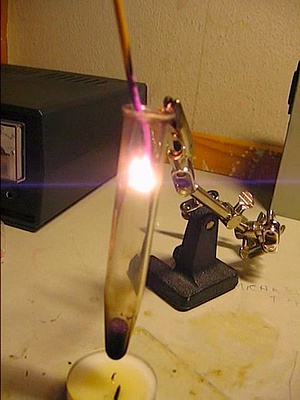
- Thermal decomposition of potassium permanganate (KMnO₄).
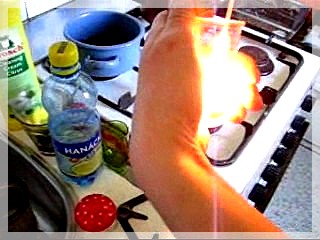
- Catalytic decomposition of hydrogen peroxide (H₂O₂), for example using manganese dioxide.
- Electrolysis of water containing a small quantity of a suitable electrolyte.
It also described generating ozone by applying high voltage to oxygen in a closed vessel. Such a mixture may contain mostly O₂ and a smaller fraction of O₃. Pure ozone is difficult and dangerous to isolate because concentrated ozone is toxic, highly reactive and potentially explosive.
Project Gallery