
Chaos Theory
Sensitive dependence on initial conditions
Introduction
Chaos theory studies deterministic systems whose future behaviour can depend extremely sensitively on their initial conditions.
The best-known metaphor is the butterfly effect: a tiny atmospheric disturbance, represented by the flap of a butterfly's wings, may eventually contribute to a very different large-scale weather development.
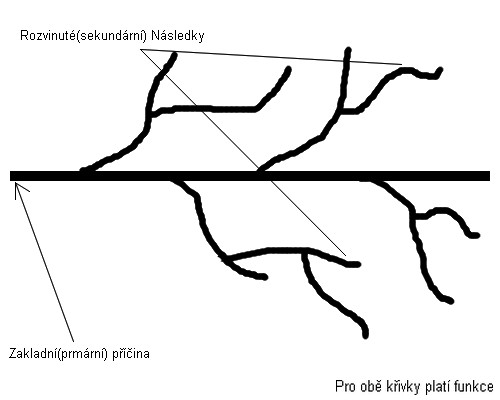
Primary and Secondary Events
The original article described a basic event from which many dependent events develop. A small difference in the original sequence can create major differences later.
As a simple life example, a serious accident can change a person's entire future. The later secondary events depend on whether the primary event occurred.
What Chaos Theory Actually Studies
Chaos theory is not the claim that events have no cause. On the contrary, many chaotic systems are governed by precise deterministic equations. The difficulty is that tiny uncertainties in the initial state grow with time, making long-term prediction practically impossible.
The field studies relationships between initial conditions, nonlinear dynamics and the resulting complex behaviour. The original article noted that the full theory includes much more complex mathematical aspects than the short introductory metaphor.
Project Gallery